
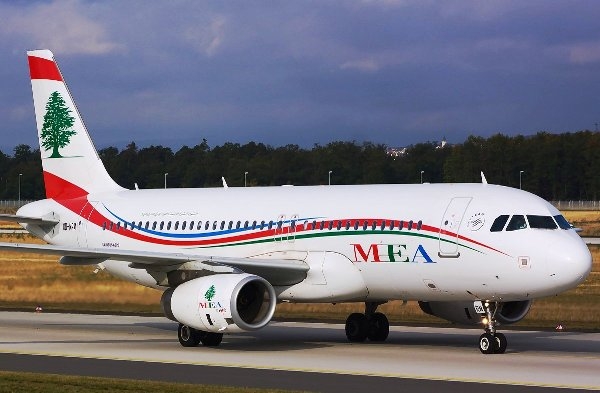
Middle East Airlines’ 70th Anniversary-38% of airport traffic and profits worth USD 80 million
Establishment
MEA was founded on May 31, 1945 by Prime Minister Saeb Salam. Operations started in the beginning of 1946 when flights operated to neighboring countries such as Cyprus, Iraq, Syria and Egypt.
In 1963, MEA was merged with Air Liban and its full title became Middle East Airlines – Air Liban. The airlines’ fleet expanded and its flights covered most continents.
Passenger traffic
Despite the rise in passenger traffic at the Rafic Hariri International Airport, the share of the MEA has declined from 66% in 1992 to 38.3% in 2014 as illustrated in Table 1. The decline is probably a result of increasing competition from Arab and foreign carriers, which went back to operating after the end of the Civil War.


MEA’s finances
In its prime, MEA reaped huge profits that helped it gain wider exposure and expand. Despite the 1975 Civil War, MEA managed to maintain profitability and was, at certain times, the only flag-carrier operating at the airport, along with a few micro companies. Each time the airport was closed, it would relocate its operations to Cyprus and lease its aircrafts.
After the war ended and as stability began to increase, the company started to face serious problems resulting from its failure to upgrade its fleet, higher overhead costs and growing competition with Arab and foreign companies which had returned to operate at the airport.
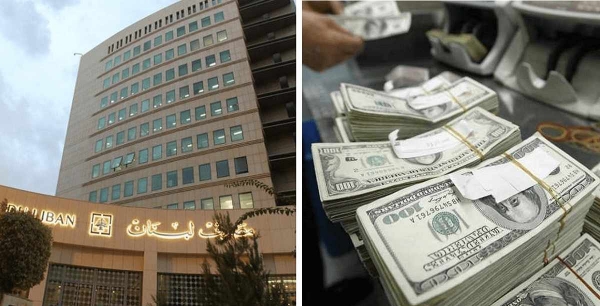
MEA’s gains soon subsided into losses, which continued to increase as the years went by. Banque du Liban was always there to cover shortfalls and avoid the collapse of the company and the sacking of its personnel. In 1998, MEA’s ownership was ultimately transferred from Intra Bank and the public sector to Banque du Liban public sector in exchange for the loans it had provided at roughly USD 250 million. The company bounced back into profits, scaling down its personnel, modernizing its fleet and shutting down all non-profit making routes. Between 1991 and 2001, MEA’s losses stood at roughly USD 452 million. The company started to recover from 2002 when its profits reached USD 8 million, a figure that soared to USD 80 million in 2014.
Profits throughout this period totaled around USD 800 million. Table 2 illustrates the financial status of MEA.

MEA currently
MEA is currently operating 17 aircrafts, 13 of which are its own. It has also entered into contract to purchase another 10 aircrafts to be delivered from 2018. The airline employs 2500 people and has obtained exclusivity as the sole national carrier of Lebanon, a right that has been extended for 12 years in September 2012.
شاهد الجدول كاملا
شاهد الجدول كاملا
MEA’s finances
In its prime, MEA reaped huge profits that helped it gain wider exposure and expand. Despite the 1975 Civil War, MEA managed to maintain profitability and was, at certain times, the only flag-carrier operating at the airport, along with a few micro companies. Each time the airport was closed, it would relocate its operations to Cyprus and lease its aircrafts.
After the war ended and as stability began to increase, the company started to face serious problems resulting from its failure to upgrade its fleet, higher overhead costs and growing competition with Arab and foreign companies which had returned to operate at the airport.
MEA’s gains soon subsided into losses, which continued to increase as the years went by. Banque du Liban was always there to cover shortfalls and avoid the collapse of the company and the sacking of its personnel. In 1998, MEA’s ownership was ultimately transferred from Intra Bank and the public sector to Banque du Liban public sector in exchange for the loans it had provided at roughly USD 250 million. The company bounced back into profits, scaling down its personnel, modernizing its fleet and shutting down all non-profit making routes. Between 1991 and 2001, MEA’s losses stood at roughly USD 452 million. The company started to recover from 2002 when its profits reached USD 8 million, a figure that soared to USD 80 million in 2014.
Profits throughout this period totaled around USD 800 million. Table 2 illustrates the financial status of MEA.
شاهد الجدول كاملا
MEA currently
MEA is currently operating 17 aircrafts, 13 of which are its own. It has also entered into contract to purchase another 10 aircrafts to be delivered from 2018. The airline employs 2500 people and has obtained exclusivity as the sole national carrier of Lebanon, a right that has been extended for 12 years in September 2012.




Leave A Comment